The impact SHO Safflower on the profitability of the rotation with single and double break scenarios in the low rainfall regions of WA
2023-5 SLR Agriculture
Overall Objective
This project aimed to understand the interactions between yield and profitability of common rotations, with the inclusion of Super High Oleic (SHO) Safflower in Western Australia’s low rainfall zones (LRZ) of Muntadgin, Tammin and Kalannie.
Project Synopsis
In the LRZ, break crops are known to swing in profitability and create significant risk for growers if they do not perform. Benefits of weed control from canola, or nitrogen in the soil from lupins or pulses, is often considered too risky. This leads to growers often leaving country out to fallow or accept lower cereal profitability from the extra costs associated with growing continuous cereal.
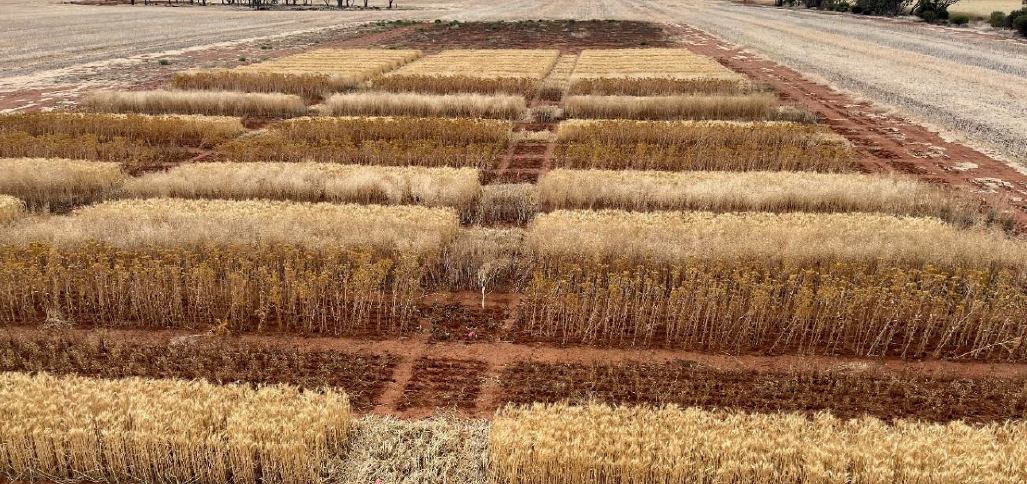
An emerging break crop option, SHO Safflower, is a drought-tolerant plant with a deep taproot and is suited to many soil types including sodic/saline soils, and valley floors with a deep profile such as sandy surface salmon gum soils. In this project, Safflower was sown at grower standard timings around May-June. Ripening occurred during the heat of summer in December, though it can be planted from April through to end of Spring and requires 2,200 growing degree days (compared to wheat at ~ 1,400). Recently developed SHO varieties are designed for use as oilseeds (edible and industrial), and can also be used for dye, and bird and stock feed. The price of SHO Safflower is currently pegged against GM Canola, although as the crop area increases and supply to markets become established, the price will be determined by the end use, which will diverge the crop to be an autonomous product.
In the LRZ, break crops are known to swing widely in profitability and create risk for growers if they underperform. Dual benefits from grain income, as well as weed control from canola, or nitrogen from pulses, are often considered too risky. This leads to growers often choosing to fallow or accept lower cereal profitability from the extra costs associated with growing continuous cereal. Therefore, this project aimed to explore the trade-offs between yield and commodity prices when assessing rotations such as fallow, continuous cereals, or double breaks.
KEY FINDINGS
Models created around profitability based off trial results, and average grain and input cost prices from 2021-2024 indicated:
- Wheat yields were comparable where safflower was interchanged with canola or chickpea as the first crop of a double-break rotation.
- Wheat sown after safflower was similar to a continuous wheat on wheat rotation in Tammin where the sub-soil moisture drawdown was less than Kalannie where the yield reduction was significantly less. In Muntadgin, disease pressure saw wheat on wheat rotations having the lowest yields of all rotations, while wheat on chickpeas and fallow had the highest yields.
- One metre soil cores taken post post-harvest found safflower to have the greatest moisture drawdown, followed by wheat then canola and chickpeas. This led to decreased yields in wheat the following year if insufficient summer/main season rainfall was received (e.g. Kalannie 2022-2023).
- Safflower sown prior to wheat lead to reduced wheat emergence as well as reduced yields compared to all rotations, where soil moisture was limited the following season.
- Fallow plots had significantly more moisture retained in soils available to rotations the following season. Despite fallow rotations resulting in the highest yields the following season across all three sites, it was considered one of the least profitable rotation options based off SLR developed models.
- Despite not always promoting high yields in crops sown the following year, Safflower was considered a competitive option in rotations if a minimum price of $700 per tonne was received.
- Based on estimated prices, trial yields, and local input cost estimates, models developed for the three locations found the most profitable rotations to be wheat–safflower–canola-wheat, safflower-wheat-wheat, wheat–canola–wheat, wheat–chickpea–wheat and wheat-safflower-chickpea-wheat. These returns were highly dependent on the commodity prices received in the year the crops were grown, and less influenced by yield. These top four profitable rotations returned ~$1,920–$2,050/ha net profit over three years.
Some other observed benefits to growing safflower include:
- A deep taproot that aids in water and nutrient access at depth
- Lower frost risk due to late flowering.
- A nematode break crop and supports weed control if sown after a short winter fallow.
- Diversifies rotations as a risk mitigation strategy
Project Status: Complete
Report: Unavailable
Project Funding
Council of Grain Grower Organisations Ltd. funding budgeted for the project on award.
Lead Researcher
Michael Lamond
Lead Researcher Email
[email protected]
Report Unavailable
The Final Report is not available for this project.
Please contact the lead researcher for more.
Lead Researcher
Michael Lamond: [email protected]