Measuring herbicide residue and the impact on subsequent grain crops under high rainfall conditions
2024-4 Stirlings to Coast
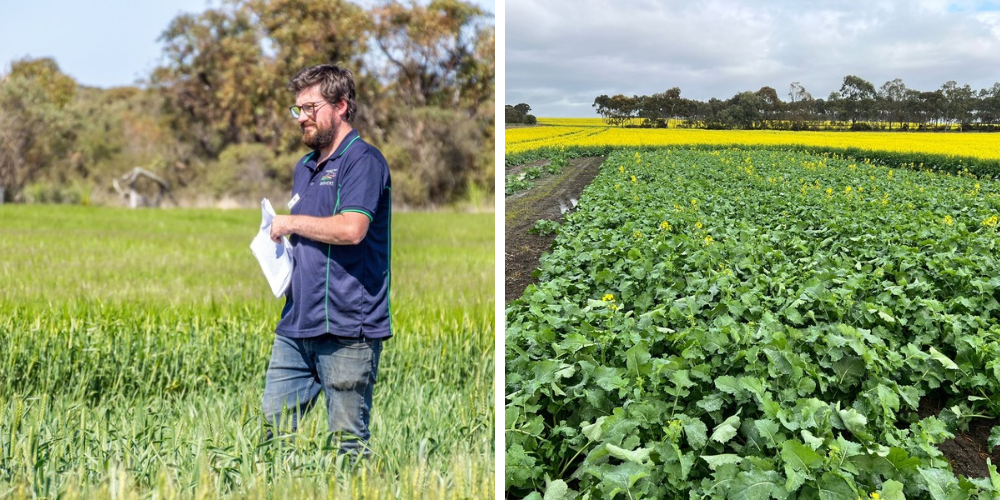
Overall Objective
This project aims to provide growers with new data on how certain herbicides of concern (i.e., IMIs, Sakura, Overwatch and Mateno Complete) may be continuing to impact crops outside of the ‘labelled’ plant-back periods in higher rainfall environments or in years of higher rainfall, particularly where waterlogging occurs. This information will not only be useful to growers and advisers in these high rainfall zone environments, but it will also be applicable to the entire WA grain belt in years of high rainfall.
Better understanding the impacts of herbicide residues after waterlogging will allow Western Australian grain farmers to make more informed rotation and herbicide application decisions to reduce negative impacts on following crops.
Project Synopsis
This project investigated whether waterlogging in high‑rainfall farming systems affects the breakdown of commonly used pre‑emergent herbicides and whether any residue carryover impacts the performance of following crops. It was based on anecdotal evidence from local growers with no previous research having been conducted in Australia. The project combined small‑plot trials with paddock‑scale investigations across 2024 and 2025 to evaluate residue levels in both soil and plant tissue under contrasting waterlogged and well‑drained conditions.
Across all trials, none of the target herbicides of concern were detected in plant tissue, and only relatively low levels of imidazolinone (IMI) herbicides were found in some soil samples. In the small plot trials, soil residue levels showed no consistent relationship with crop establishment, NDVI, or yield, indicating that waterlogging did not increase the risk of carryover for the herbicides examined. While several other agrichemicals were detected, particularly fungicides and other herbicides, their occurrence varied and was not statistically significant.
The project has generated strong interest among growers and agronomists, highlighting the value of better understanding chemical behaviour in high‑rainfall environments. The findings provide growers with confidence that key pre‑emergent herbicides are unlikely to persist at harmful levels after waterlogging, while also emphasising the need for future research into threshold residue concentrations that may affect plant health or soil biota.
Project Status: Complete
Report: Unavailable
Project Funding
Council of Grain Grower Organisations Ltd. funding budgeted for the project on award.
Lead Researcher
Dan Fay
Lead Researcher Email
[email protected]
Report Unavailable
The Final Report is not available for this project.
Please contact the lead researcher for more.
Lead Researcher
Dan Fay: [email protected]